
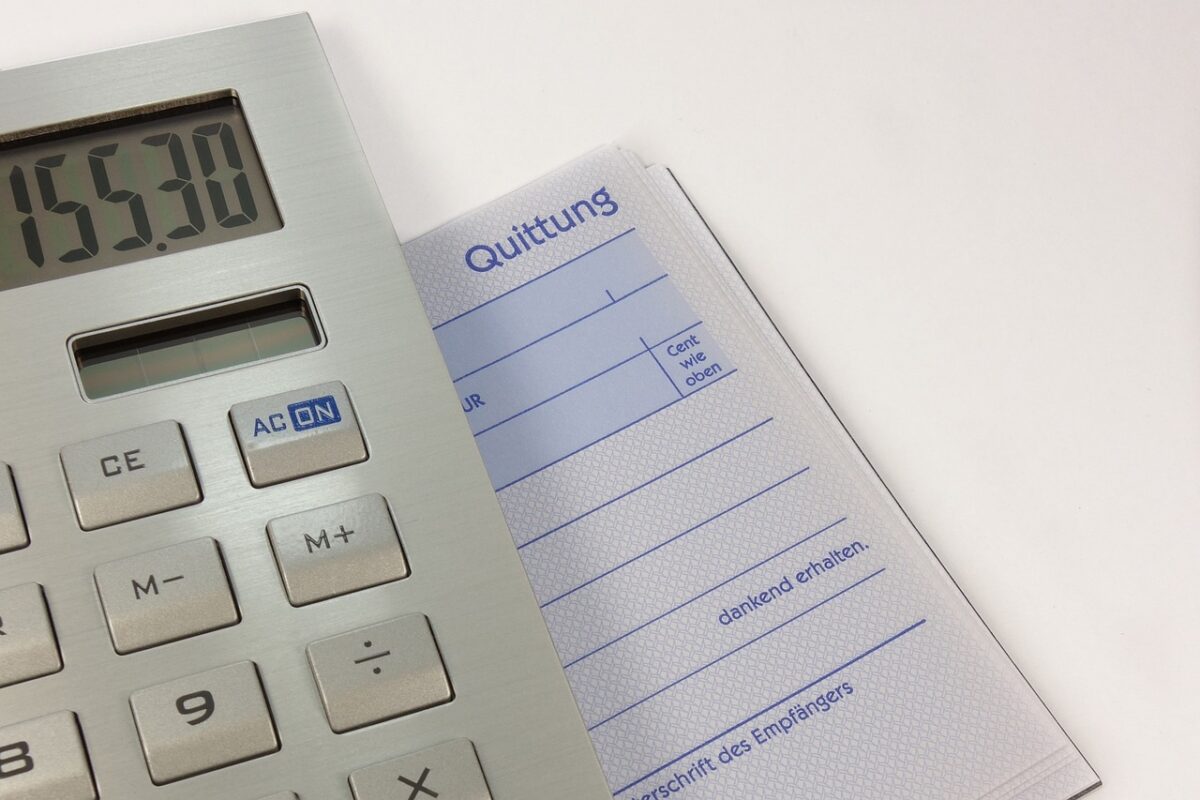
An invoice missing the customer’s GSTIN costs them input credit – and costs you the customer. GST tax invoices have legally mandatory fields, and paper bill books remain the daily reality for clinics, salons, workshops and retailers. Here are the fields every bill must carry, invoice versus bill-of-supply rules, numbering discipline, and the printing specs for duplicate books.
Pillar: stationery checklist. Service: stationery printing with GST bill books. Salon specifics: salon GST billing.
What fields must a GST tax invoice carry?
Every GST tax invoice needs: supplier name, address and GSTIN; a consecutive serial number (unique for the financial year); date of issue; customer name, address and GSTIN/UIN where registered; HSN code or SAC code for the goods or services; description, quantity and taxable value; tax rate with CGST/SGST (intra-state) or IGST (inter-state) amounts split out; total value with tax; place of supply for inter-state transactions; and signature or authorised signatory. Miss the customer GSTIN and their credit claim fails – the single most expensive field to get wrong.
Tax invoice or bill of supply – which do I issue?
Registered suppliers making taxable supplies issue tax invoices. Composition dealers and suppliers of exempt goods or services issue bills of supply (no tax charged, clearly headed as such). Get this wrong and notices follow – composition dealers charging GST on invoices is a classic audit trigger. When in doubt, your CA decides in five minutes; the printer prints what the CA approves.
How should invoice numbering and copies work?
One consecutive series per financial year, never restarting monthly or reusing cancelled numbers (mark cancellations clearly and retain all copies). Paper books print duplicate (supplier/customer) or triplicate (adding transporter/office) with perforation and sequential pre-printing. Digital billing (including our salon billing app) auto-numbers, but the discipline is identical – gaps invite questions.
What are the bill-book printing specs?
Standard A5 or 8×6 inch formats, 100-set books (100 originals plus duplicates) with board backing and sequential numbering, your GSTIN, HSN/SAC starter entries and terms pre-printed, perforation for clean tear-off, and optional carbonless (NCR) paper eliminating interleaves. Send logo, details and starting serial; approve the proof against the field list above before bulk.
Field-by-field print checklist
Give this list to the printer with the artwork. A field missing at proof stage is a reprint, not an edit.
| Field | Check before print |
|---|---|
| Supplier name and address | Matches the GST registration certificate |
| GSTIN | 15 characters, printed exactly, no spaces or missing digits |
| Invoice number | Pre-printed series, consecutive, unique for the financial year |
| Date | Space for day, month and year, filled on issue |
| Customer details | Name, address and GSTIN field or blank line for unregistered buyers |
| HSN or SAC | Pre-printed for your common items or a clear column to write |
| Description and quantity | Enough ruled lines, with unit and rate columns |
| Tax columns | CGST, SGST and IGST columns, or a rate and amount column |
| Total | Amount in figures and words |
| Place of supply | A field for state and state code on inter-state bills |
| Signature | Authorised signatory block and stamp space |
| Terms | Payment terms, bank details if used, and jurisdiction if advised |
Place of supply and the tax split
The customer’s location decides whether you charge CGST and SGST or IGST. For a local sale within Telangana, the tax splits into CGST and SGST. For a sale to another state, it is IGST.
- Print separate CGST, SGST and IGST columns, or a rate column plus a tax amount column. Do not force every bill into one combined tax line.
- Add a place-of-supply field with state and state code. It is easy to fill and hard to reconstruct later.
- For services, the place of supply rules differ from goods. Confirm the treatment for your category with your CA.
- If you are unregistered, do not charge GST. Issue a bill of supply or a plain invoice as advised.
The bill book should make the correct choice easy and the wrong one visible. A single tax column invites errors when a customer from another state walks in.
Numbering and the cancellation log
- One series per financial year, with a prefix that identifies the business or the location.
- Keep the number short enough to write and read, and avoid special characters beyond a hyphen or slash.
- Never restart the series monthly or per book. If you run two books, use two prefixes.
- Do not tear out a spoiled bill. Mark it cancelled, keep all copies and record the number.
- Record the opening and closing number of every book, with the date issued to the counter.
- Check the physical number against the digital record monthly, especially where two people bill.
A gap in the series is a question at assessment. A cancelled bill with all copies attached is an answer.
Bill book specification sheet
| Specification | Typical choice | Why |
|---|---|---|
| Size | A5 or 8 x 6 inches | Fits a counter tray and a delivery bag |
| Sets per book | 100 sets | Manageable weight, frequent reorder |
| Copies | Duplicate, or triplicate for transport | Customer copy plus office record |
| Paper | NCR carbonless, 55 to 70 GSM | No carbon sheets, clean tear-off |
| Binding | Board backing, glued or stapled spine | Stays flat on the counter |
| Perforation | Every set | Clean tear without tearing the next bill |
| Numbering | Pre-printed in red, sequential | Visible and hard to alter |
| Pre-printed details | GSTIN, address, terms, HSN or SAC starter list | Less writing at the counter |
Ask for a proof with the actual numbering and the GSTIN. Check the first and last number in the book, not only the middle.
Proof checklist before bulk print
- Read the GSTIN aloud, digit by digit, against the certificate.
- Check the address, pincode and phone number.
- Check the invoice title: tax invoice, bill of supply or plain invoice.
- Check that the tax columns match the way you bill.
- Check the serial number range and the opening number.
- Write on the proof with the pen the counter uses. Ink smudge on NCR paper is a real problem.
- Approve one bound book before the full run.
Paper or digital, and where they meet
Many businesses run both. The counter issues a paper bill, and the same sale is entered in billing software or a spreadsheet at the end of the day.
- Use the same invoice number in both places. Do not let the software generate a second series.
- Reconcile daily or weekly, not at year end.
- Photograph or scan large bills so the digital record is complete.
- Keep the paper books for the retention period your CA advises, even after moving to software.
- If you use e-invoicing, the portal reference belongs with the invoice record, not on the counter copy unless your CA advises it.
Common mistakes
- Printing 1,000 books with a GSTIN that has one wrong digit.
- A single tax column that cannot show CGST and SGST separately.
- No place-of-supply field on a bill used for inter-state customers.
- Restarting numbers every month, or reusing a cancelled number.
- Pre-printing an HSN code that no longer matches the product.
- Using glossy paper that the counter pen smudges.
- Forgetting to record which book was issued to which counter.
FAQs
Can I handwrite GST invoices? Yes if all mandatory fields are present and legible – but digital or pre-printed books prevent the errors handwriting invites.
What if I cross the registration threshold mid-year? Register immediately and switch invoice formats from that date; consult your CA on transitional billing.
Can DeskBees print compliant books? Yes – contact us with GSTIN, logo and starting number. Verify current GST rules with your CA – rates and e-invoicing thresholds change.
Last updated: 20 September 2026.