Printing, engraving or embroidery? The personalisation method decides whether a gift looks premium for years or peels by February. Each suits different materials, budgets and quantities – here is the method-by-material guide, cost and lead-time logic, and the artwork specs that prevent blurry logos on 500 mugs.
Cluster: corporate gifting. Laser detail: marking vs engraving vs etching.
Printing, engraving or embroidery – which method?
Choose printing (screen, UV, digital) for multi-colour logos on boxes, bottles, mugs and paper – fastest at volume, unlimited colours, moderate durability. Choose engraving (laser) for metal, wood and acrylic where permanence signals premium – monochrome but eternal, names and logos that never peel. Choose embroidery for apparel, caps and fabric bags – textured brand presence that outlasts prints through washes. The material decides first: you cannot embroider steel or engrave cotton. Our laser service covers metal and wood personalisation; printing lines cover the rest.
What does personalisation cost and add in time?
Printing adds modest per-unit cost falling with volume plus screen or setup charges amortised across the run. Laser engraving prices per piece by size and complexity with minimal setup – economical even at 25 pieces. Embroidery prices by stitch count with digitising charges for the logo file. Lead-time rule: add 5 to 7 working days for personalised runs over plain supply, more in festive season. Artwork in vector (AI, CDR, PDF, SVG) is non-negotiable – JPG logos redrawn or rejected, never silently printed blurry.
What personalisation works per gift type?
- Drinkware and bottles: UV printing for colour, laser for steel premium lines.
- Diaries and boxes: foiling, debossing or UV print for tactile luxury.
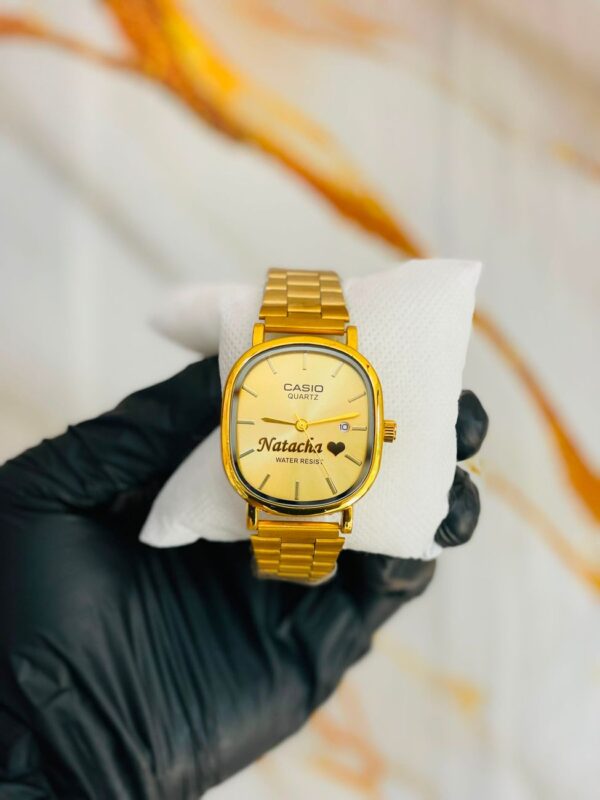
- Metal gifts and pens: laser engraving with names – the premium standard.
- Apparel and bags: embroidery for longevity, printing for all-over colour.
- Hampers: printed sleeves, tags and message cards tie the box together.
Method by material
The material decides the method before budget enters the conversation. This table is the short version we use when a brief arrives.
| Gift material | Method | Why |
|---|---|---|
| Stainless steel bottle, pen, card holder | Laser engraving | Permanent mark, no ink to peel |
| Aluminium, anodised or plain | Laser engraving or marking | Contrast depends on the surface finish |
| Glass and ceramic | UV print, sandblast or laser | Print for colour, etch for a frosted mark |
| Wood and bamboo | Laser engraving | Burns a warm, permanent mark into the grain |
| Acrylic and signage blanks | UV print or laser | Colour fill or a frosted engrave |
| Cotton shirts, caps, tote bags | Embroidery or screen print | Embroidery lasts, print carries full colour |
| Polyester jackets and sports kit | Embroidery or transfer print | Test the heat tolerance of the fabric |
| Leather folders and diaries | Debossing, foil or laser | Heat and pressure can mark leather |
| Paper boxes, sleeves, cards | Offset, digital, foil, deboss | Cheapest colour at volume, premium finishes at low volume |
| Plastic mugs and bottles | UV print or pad print | Curved surfaces need a conforming process |
If the gift is a mix of materials, as most hampers are, plan two or three processes rather than forcing one. A single method across a mixed box usually looks like a compromise on at least one item.
Artwork specs by method
- Print and laser: vector files only, AI, CDR, PDF or SVG, with text converted to outlines.
- Embroidery: a stitch file, DST or EMB, with thread colours specified. A JPG cannot be stitched without digitising.
- Minimum detail: thin hairlines disappear on textured metal and knit fabric. Simplify small text or drop it.
- Engraving contrast: a dark mark on light metal reads best. On dark surfaces, ask for a tested fill or a different area.
- QR codes: at least 20 x 20 mm on a flat face, tested on two phones after the sample is made.
- Colour matching: give a Pantone reference for print and a thread code for embroidery. Screen colours are a guide, not a match.
- Names and variable data: send a spreadsheet with exact spelling, spacing and capitalisation.
The sample routine
A sample is not a formality. It is the only way to see how a logo behaves on the actual gift.
- Approve the artwork as a PDF proof, with the spelling checked character by character.
- Make one physical sample on the actual gift, not a similar blank.
- Check it in daylight and under office lighting. Laser contrast changes with angle.
- For apparel, wash the sample once before approval.
- For drinkware, fill it, chill it and check the print at the curve.
- Photograph the approved sample and keep it as the reference for the batch.
- Re-approve if the blank, the colour or the artwork changes.
What drives cost and lead time
| Driver | Effect | How to control it |
|---|---|---|
| Setup or screen charges | Fixed cost spread across the run | Consolidate designs and quantities |
| Number of colours | Each colour adds a screen or a pass | Reduce to two or three colours |
| Personalisation count | Every unique name is a separate job | Batch names and allow extra days |
| Blank cost | Often the largest line | Choose the gift before the decoration |
| Material difficulty | Curves, coatings and dark surfaces slow the work | Test one piece first |
| Festive peak | Capacity tightens across every supplier | Book four to six weeks ahead |
Lead time follows the same logic: plain supply is quick, personalised supply adds days, and a new blank or a new stitch file adds a sample round. Build the sample into the timeline rather than treating it as a delay.
Durability over a year
| Method | Handling | Washing | Best for |
|---|---|---|---|
| Laser engraving | Excellent | Not applicable | Metal, wood, acrylic keepsakes |
| UV print | Good on flat surfaces | Hand wash only | Mugs, bottles, boxes, pens |
| Screen print | Good | Survives repeated washes on cotton | Apparel and bags at volume |
| Embroidery | Excellent | Survives machine washing | Shirts, caps, jackets, fabric bags |
| Foil and deboss | Good with care | Not applicable | Diaries, folders, gift boxes |
Ask what the gift will go through, not only how it should look on presentation day. A mug that is washed daily needs a different process from a box that stays on a shelf.
Common mistakes
- Supplying a JPG logo and expecting a crisp engrave or a clean stitch.
- Putting a detailed logo on a 40 mm embroidery area.
- Engraving coated or plated metal without a test piece.
- Printing a curved bottle with a process designed for flat sheets.
- Approving a screen proof instead of a physical sample.
- Sending names in a chat message rather than a verified sheet.
- Ordering in the last week of the festive season and accepting whatever capacity is left.
FAQs
Individual names on 500 gifts? Yes via batch personalisation from your list – see our laser batch process; allow extra days for data handling and verification.
Can I see a sample first? Always approve one physical sample before bulk – screens lie about thread, foil and laser contrast alike.
How do I brief? Contact us with gift shortlist, quantities, vector logo and deadline for method recommendation and quote.
Last updated: 20 September 2026.