
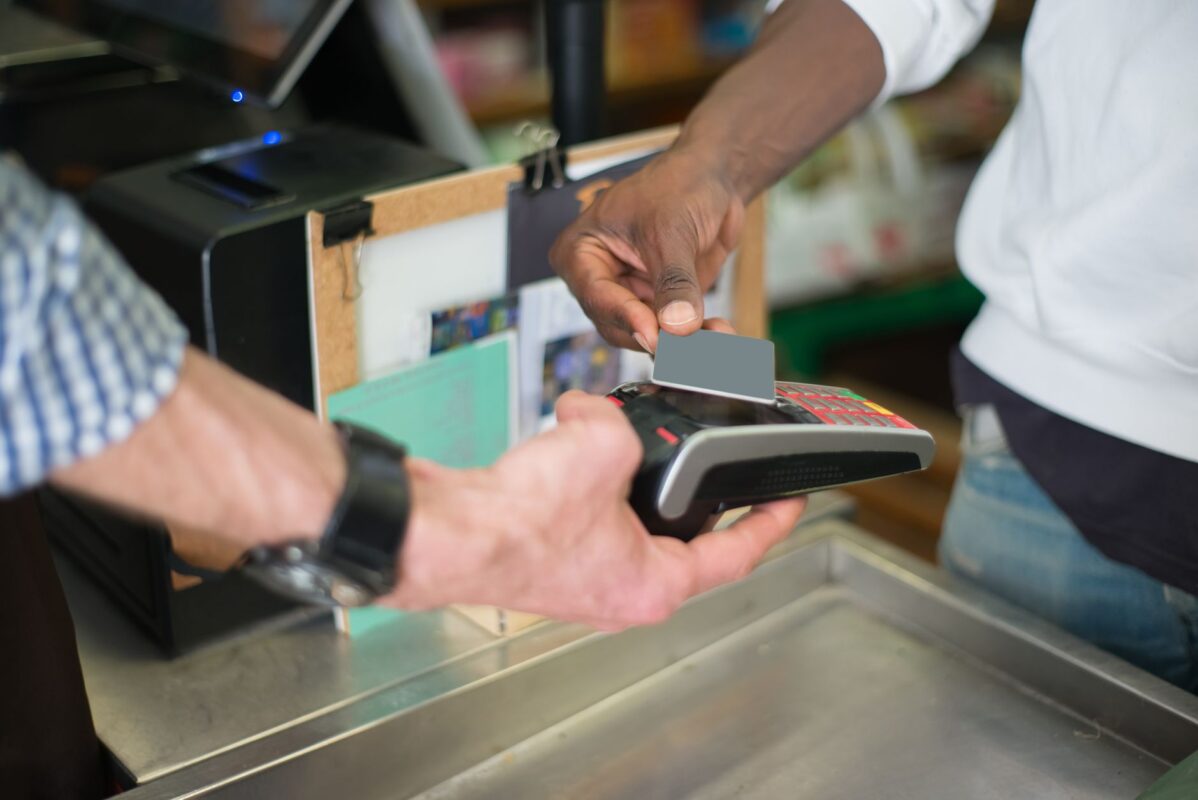
Tap a card on a phone and your profile opens – contact saved, catalogue browsed, review left. No app, no battery, no pairing. NFC business cards feel like magic, but the mechanics are simple and the privacy questions deserve straight answers. Here is how tap-to-share works, what data moves (and what never does), compatibility, and team-rollout economics.
Related: digital vs paper cards, NFC review cards vs QR. Product: digital business card (and correct-shop-price note in our audit).
How do NFC business cards work?
The card embeds a passive NFC chip storing a short link (a vCard, your MyDigiBiz profile, catalogue or review page). Tapping an NFC-enabled phone against it powers the chip momentarily by induction; the phone reads the link and opens it in the browser. Setup is one-time programming of your link onto the chip plus profile creation – we program and test on Android and iPhone before handover. Updating your number later means editing the linked profile, not reprinting the card – the chip points at a living page.
What does a tap share – and what stays private?
A tap shares only what you published on the linked profile: name, designation, phone, email, links, catalogue – your chosen public face. It reads nothing from the tapper’s phone: no contacts copied, no location taken, no data pulled. Privacy-wise the card is a smart hyperlink in plastic, not a two-way exchange – safer than dictating your number aloud in a crowded room, and fully under your control since you edit the profile anytime.
Which phones support NFC tap?
Almost all Android phones from the last decade with NFC enabled, and iPhones from the XS generation (2018) upward reading background tags without any app. Older iPhones and a few budget Androids lack NFC – which is why quality cards print a QR fallback linking the same profile. Test-tap across team phones at handover; compatibility exceptions get QR-first usage while everyone else taps.
What do team rollouts cost?
Per-card pricing with team discounts plus one-time profile setup; cards last years while profile edits stay free. Online sellers list single cards around Rs. 399 to Rs. 699 (September 2026 market range) – our shop pricing includes programming, testing and support, with team pricing on the product page (note: the audit flagged a Rs. 10 shop listing – confirm live price before ordering). ROI math: one recovered lost-contact per month per salesperson pays the card many times over.
FAQs
What if I change jobs or numbers? Edit the profile in minutes; every card already handed out updates instantly. Leavers’ cards get deactivated or reassigned centrally.
Do taps need internet? The tap itself needs none; opening the linked profile needs data – same as any shared link.
Where do I order? Shop product with programming or contact us for team rollouts with sample profile to try on your phone first.
Last updated: 20 September 2026. Seller prices change – check live listings.